York Household Car Availability: What Census 2021 Can Tell Us
Almost a quarter of York households had no car or van available in March 2021. Our analysis explains the distribution, its limits and how to use it alongside current travel information.
Published
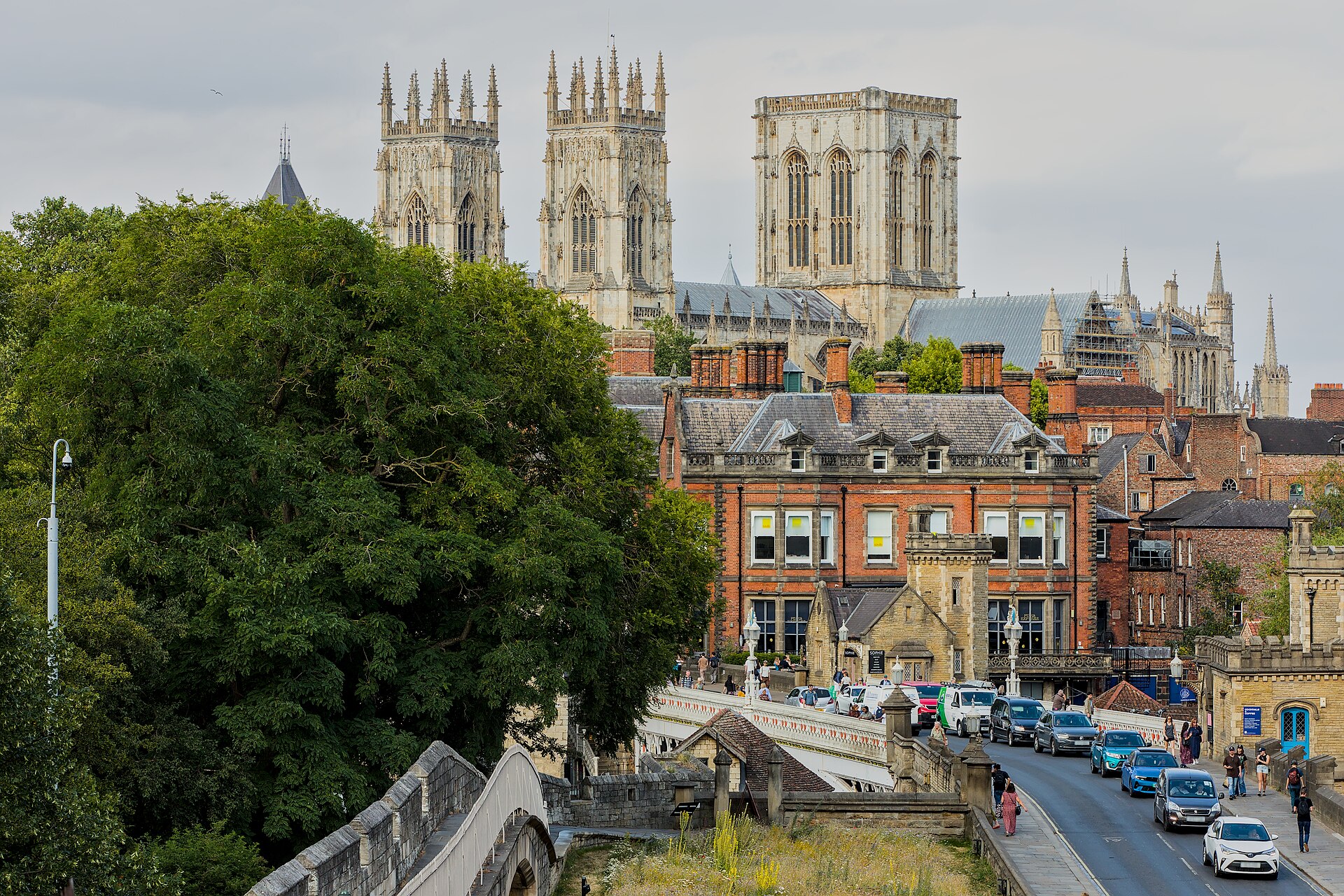

Almost a quarter of households in York had no car or van available on Census Day, 21 March 2021. Our analysis of Census 2021 table TS045 puts the figure at 20,470 households, or 23.95%. That provides historical context for travel guides, though it tells us little about which journeys those households made or how they travelled.[1][4]
York’s Household Car Availability in Numbers
The figures cover the whole York unitary authority, geography code E06000014. They describe households across that council area, so they should not be presented as a city-centre statistic. The car availability table records 85,456 households in total.[4]
| Cars or Vans Available | Households on 21 March 2021 | Share of York Households |
|---|---|---|
| None | 20,470 | 23.95% |
| One | 39,307 | 46.00% |
| Two | 20,190 | 23.63% |
| Three or more | 5,489 | 6.42% |
| All households | 85,456 | 100.00% |
One vehicle was the largest category, accounting for just under half of York households. Households with no vehicle and those with two vehicles were almost equal in number, with 280 more in the no-vehicle group. Combining the two-vehicle and three-or-more categories gives 25,679 households with at least two vehicles, or 30.05%. These percentages and comparisons are our calculations from the published household counts.[4]
What Counts as an Available Car or Van?
The Office for National Statistics, which publishes census estimates, defines this measure as cars or vans owned or available for use by household members. Ownership alone is too narrow a description. A company car or van counts when it is available for private use, and a lodger’s vehicle is included.[1]
Some details are less intuitive. Temporarily broken vehicles and vehicles that have failed their MOT are included. Motorbikes and mobility scooters are excluded, as are vehicles with a Statutory Off Road Notification and those kept at another address or not easily accessed. Cars or vans used by residents of communal establishments fall outside this household measure.[1]
That makes availability an imperfect description of someone’s immediate travel options. An included vehicle could have been temporarily unusable. Equally, the no-car category gives no count of driving licences, bus passengers or cycling trips. The table also groups every household with three or more vehicles together, preventing an exact calculation of York’s total vehicles or average vehicles per household from these categories.[1][4]
Household Composition Adds Context, With a Limit
A household count gives each household equal weight, whatever its size. The separate Census 2021 household composition table, TS003, records 11,607 York households consisting of one person aged 66 or over. It uses its own all-household total of 85,458. Those figures help explain why household statistics answer a different question from counts of individual residents.[2][5]
But the two tables do not identify which of those older people living alone had a car available. Matching the geography and census date cannot establish an overlap between categories in separate tables. A claim about older residents’ car availability would need data that classify the same households by both characteristics.[4][5]
Student figures also need care in York. The ONS explains that students were counted at their term-time address even if they were physically elsewhere on Census Day. These are statistics about usual residence, rather than a headcount of everyone present in the city that day.[3]
How to Use This Alongside a York Travel Guide
For readers planning a journey, the census provides background rather than a recommendation. The 20,470 no-vehicle households show the scale of that household category in York in 2021. They do not establish how many people currently use buses, whether a particular route suits a journey or how easily someone can reach a destination.[1][4]
Keep the historical figure separate from the practical decision. For your journey, check the service information for the date and time you intend to travel, including the return trip. A household statistic observed in March 2021 cannot settle those details for a journey today.[1]
Calculation Method and the Two-Household Difference
Our analysis uses the York records retrieved from Nomis on 20 October 2026, alongside the ONS version 4 pages for TS045 and TS003. The observation date remains 21 March 2021. For car availability, we selected geography E06000014, measure 20100, and categories 0 to 4. Category 0 supplies the denominator. Categories 1 to 4 are mutually exclusive and sum to 85,456. Each percentage is its category count divided by 85,456, multiplied by 100 and rounded to two decimal places.[1][2][4][5]
TS003’s total is two households higher. ONS disclosure controls introduce small changes to some counts and can produce differences between tables, so we retain each table’s own denominator. ONS also flags household composition quality considerations and definition changes since 2011. Any future comparison should check those conditions before treating a difference as evidence of changing travel needs in York.[1][2][4][5]
Sources and checks
These sources were used for this article. Availability, prices and service details can change after the stated check date.
- Car or van availability
- Office for National Statistics
Checked 20 October 2026.
Car or van availability measures vehicles owned or available for use by household members. Company vehicles available for private use, lodgers’ vehicles, temporarily broken vehicles and vehicles that have failed their MOT are included. Motorbikes, mobility scooters, SORN vehicles and vehicles kept elsewhere or not easily accessed are excluded. Vehicles used by communal establishment residents are outside this household measure. Statistical disclosure controls can produce small differences between tables.
- Household composition
- Office for National Statistics
Checked 20 October 2026.
TS003 classifies households by relationships between household members. The household composition estimates relate to 21 March 2021. Household composition has quality considerations and changes in the definition of other household types since 2011.
- How life has changed in York: Census 2021
Checked 20 October 2026.
Students were counted at their term-time address even when physically absent on Census Day. Usual residence statistics should not be interpreted as a count of everyone physically present in York on Census Day.
- TS045
Checked 20 October 2026.
The York records use geography E06000014 and report 2021 household counts. TS045 records 85,456 households, comprising 20,470 with no vehicle, 39,307 with one, 20,190 with two and 5,489 with three or more. Our analysis divides each category count by 85,456 and multiplies by 100, giving 23.95%, 46.00%, 23.63% and 6.42% after rounding to two decimal places. Our analysis finds 280 more no-vehicle households than two-vehicle households. Our analysis combines 20,190 and 5,489 to give 25,679 households with at least two vehicles, or 30.05% of 85,456. The four mutually exclusive car availability counts sum to 85,456. The three-or-more category prevents calculation of an exact total or average number of vehicles from this table.
- TS003
Checked 20 October 2026.
TS003 records 85,458 York households in 2021. TS003 records 11,607 York one-person households whose resident was aged 66 or over. The TS003 total is two households higher than the TS045 total. The household composition records do not classify those households by car availability.